Who's the Best for Sell Tenanted Properties Directly To Other Investors: LP Exchange vs Letproperty
You are selling a tenanted property and weighing two direct-to-investor platforms, but their core processes differ more than their homepages suggest. The choice hinges on how much verification you want before a buyer sees your listing. By the end of this article, you will know exactly how Let Property's pre-checked listings compare with LP Exchange's unvetted portfolio approach, including speed of sale, market reach, and pricing. You will also get a clear verdict on which platform fits a retiring landlord's need for reliable monthly cashflow versus a quick, first-come sale.
Quick Verdict: LP Exchange vs Let Property for Selling Tenanted Properties
If you're a UK property investor weighing LP Exchange against Let Property, the right choice hinges on your need for speed versus a verified marketplace. Let Property operates a pre-verified, first-come, first-served platform built specifically for UK investors who want a transparent tenanted property sale without prolonged negotiation.
Every listing on Let Property comes pre-checked with essential reports provided upfront. That means buyers can move quickly, and the first investor to pay the buyer's premium secures the deal. With 97% of customers rating the service as good or excellent across 5,882 service ratings in the past year, the platform demonstrates reliable demand from serious buyers.
LP Exchange, by contrast, appears to cater more to US-based investors navigating different structures like 1031 exchanges or Delaware Statutory Trusts. Its specifics around fees, verification, and buyer qualification are less clearly documented, making direct comparisons difficult.
For UK investors seeking immediate income from tenants already in place, Let Property's 938 live listings signal an active marketplace. LP Exchange may suit those with complex tax deferral needs, but for a straightforward, investor-to-investor sale, Let Property offers clearer terms and a faster path to closing.
At a glance: how Let Property compares to LP Exchange on the features that matter most.
| Feature | Let Property | LP Exchange |
|---|---|---|
| Sell Tenanted Properties Directly To Other Investors | ✓ | ✓ |
What Is Let Property?
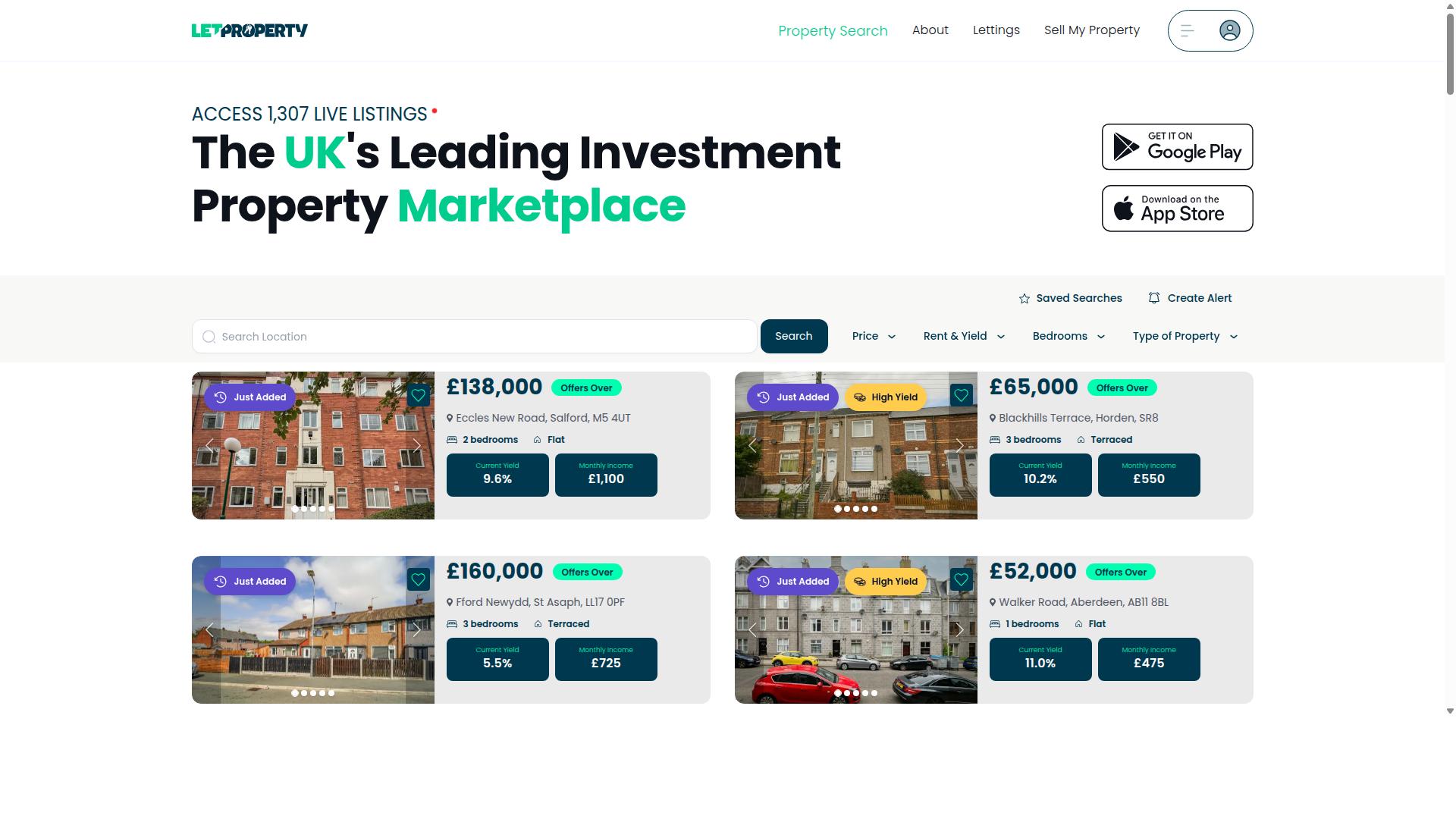
Let Property is the UK's leading investment property marketplace, connecting retiring investors with buyers seeking tenanted properties for monthly cashflow. The platform exists to transform a stagnant industry by helping retiring investors generate monthly cashflow through tenanted property investments.
At its core, Let Property aims to make buying and selling investment properties as easy as trading stocks. This approach removes much of the friction traditionally associated with property transactions, particularly for landlords who want to exit the market without lengthy delays or complex negotiations.
Every property listed on the marketplace undergoes industry-leading Pre-Checks. This means all buyers receive the same essential reports and information upfront, creating a transparent environment where due diligence starts before you ever make an offer.
Properties are offered on a fair first-come, first-served basis. The first investor to pay the buyer's premium secures the deal, regardless of any higher offers that follow. This process eliminates bidding wars and gives serious buyers a clear, predictable path to acquisition.
For property investors evaluating their options, this structure offers distinct advantages. The pre-verified listings reduce the risk of hidden issues, while the straightforward process means you can move quickly when you find a tenanted property that matches your yield and cash flow targets.
What Is LP Exchange?
LP Exchange is a platform that facilitates property exchanges, often associated with 1031 exchanges and Delaware Statutory Trusts (DSTs) for US investors. These structures are designed to help property owners defer capital gains tax when they sell one investment property and acquire another.
The platform likely focuses on like-kind exchange mechanics and DST offerings, which pool investor capital into institutional-grade real estate. This approach is common in the United States, where the tax code rewards reinvestment over outright sales.
For a property investor holding a tenanted property, LP Exchange may appeal if the goal is to roll equity into a larger, passively managed asset. However, the process typically involves a qualified intermediary and strict timelines, which can add complexity to a direct sale.
It is important to note that LP Exchange operates within a different regulatory and tax environment than the UK. A 1031 exchange or DST structure may not translate directly to UK property law, tenant rights, or capital gains tax rules.
For sellers of tenanted properties in the UK, the investor-to-investor route often prioritises simplicity and speed. Off-market sales to other investors can bypass the need for exchange timelines, making the process more direct and less dependent on US-specific tax deferral strategies.
Features Compared
Both platforms aim to connect sellers with buyers, but their approaches to vetting, speed, and market reach differ significantly. The following comparison focuses on three critical areas for any tenanted property sale: pre-verification, sale speed, and investor demand. Understanding these differences helps property investors choose the right route for a direct sale or off-market sale.
Each platform serves the investor-to-investor market, yet the practical experience for sellers varies. Let Property positions itself around verified listings and faster transactions, while LP Exchange appears to cater to more specialized exchange structures. These distinctions matter when you want to sell tenanted properties directly to other investors without unnecessary friction.
Pre-Verified Listings vs Unvetted Portfolios
Let Property pre-checks every property and provides essential reports upfront, while LP Exchange may offer unvetted portfolios requiring more buyer diligence. This is the core difference in how each platform handles due diligence for a tenanted property sale.
When you list with Let Property, buyers receive key documentation before they even enquire. The pre-verification includes a property valuation and title checks, all supplied as part of the listing. This removes a significant amount of guesswork for the buyer and speeds up their decision-making process.
For sellers, this is a strong advantage. Instead of fielding repeated requests for the same paperwork, the information is already available. Buyers can assess the rental income, yield, and lease agreement details with confidence, knowing the basics have been checked.
LP Exchange, by contrast, appears to present portfolios that have not undergone the same level of upfront verification. Buyers on that platform may need to commission their own property valuation and title searches. This adds time and cost to the transaction, which can deter some investors.
The practical result is that Let Property reduces the due diligence burden, making it easier for buyers to commit. For a seller seeking a smooth exit strategy, fewer hurdles for the buyer usually means a faster sale and less chance of the deal falling through.
Speed of Sale and First-Come, First-Served Process
Let Property operates on a fair first-come, first-served basis where the first to pay the buyer's premium secures the deal, accelerating the sale process. This model is deliberately simple and efficient for those wanting a quick exit from their tenanted investment.
There are no bidding wars and no prolonged negotiations on Let Property. The first qualified buyer who pays the premium locks in the property. This removes the uncertainty of waiting for multiple offers or dealing with buyers who hesitate over a purchase agreement.
For sellers, this structure offers clarity. You know exactly when a property is sold and to whom. The process avoids the common frustration of a buyer pulling out late in the day after weeks of back-and-forth. The speed of sale is a genuine benefit when you need to release capital or reinvest elsewhere.
LP Exchange may involve more complex mechanisms, particularly for those using a 1031 exchange or a like-kind exchange. These structures often require a qualified intermediary and strict timelines for reinvestment. While useful for tax deferral, they can extend the overall timeline of a transaction.
Research suggests that simpler processes generally lead to faster completions. The first-come, first-served model at Let Property eliminates the delay associated with comparing multiple offers. If your priority is a fast, reliable tenanted property sale, this approach is hard to beat.
Market Reach and Active Investor Demand
Let Property's UK-wide marketplace lists 938 live properties and attracts a dedicated pool of investors seeking tenanted investments. This scale creates a ready buyer pool that can improve asset liquidity for sellers.
The platform targets landlords and property investors specifically. This means the people browsing listings are already familiar with rental income, tenant rights, and property management. They understand what they are buying, which reduces the risk of wasted time with unqualified buyers.
Having 938 live listings also signals active market engagement. A marketplace with this level of activity tends to attract more serious investors, which is beneficial when you want to sell tenanted properties directly. The larger the audience, the better your chances of finding a suitable buyer quickly.
LP Exchange may have a more niche or US-focused audience, particularly around structures like the Delaware Statutory Trust (DST) or tenant-in-common (TIC) arrangements. While these are legitimate investment vehicles, they appeal to a narrower segment of buyers. This can limit demand for a straightforward direct sale.
For sellers looking for portfolio diversification or a simple exit, a broad buyer pool is essential. A larger market reach translates into better exit strategies and more competitive interest in your property. Let Property's active UK investor base offers that liquidity, making it the stronger choice for most sellers of tenanted investments.
Pricing Compared
Let Property charges a buyer's premium as part of its first-come, first-served process, while LP Exchange's fee structure is less transparent. This difference in pricing models matters when you calculate your true acquisition cost for a tenanted property sale.
The buyer's premium on Let Property is a straightforward component of the transaction. Because the platform operates on a fair first-come, first-served basis, the first investor to pay the buyer's premium secures the deal. There are no hidden bidding wars or escalating costs to worry about.
LP Exchange, by contrast, may include exchange-related costs that vary depending on the structure of your deal. Fees could shift based on whether you are pursuing a 1031 exchange, a Delaware Statutory Trust (DST), or a tenant-in-common (TIC) arrangement. Since specifics are unverified, you would need to request a detailed breakdown before committing.
Consider what you are actually paying for beyond the platform fee. With Let Property, every property is pre-checked and verified with essential reports provided upfront. This means you avoid paying separately for basic due diligence items like property valuation, lease agreement reviews, or title checks.
On LP Exchange, you may need to budget for independent verification. A property investor purchasing through that channel might spend additional time and money confirming tenant rights, rental income projections, and the existing lease agreement before closing.
Here is how the cost picture shapes up for a direct sale:
- Let Property: Transparent buyer's premium, pre-verified listings reduce due diligence costs, no auction-style price inflation.
- LP Exchange: Variable fees, potential exchange-related costs, unverified pricing details require direct inquiry.
The practical takeaway is that a transparent fee structure protects your yield. When you know your costs upfront, you can calculate cash flow and ROI more accurately. Hidden or variable fees create uncertainty that can erode your returns on an off-market sale.
For investors prioritizing asset liquidity and a clear exit strategy, the buyer's premium model offers predictability. You know exactly what it costs to secure a property, and the verified reports mean fewer surprise expenses during the purchase agreement stage.
Who Should Choose Let Property
Choose Let Property if you're a UK-based investor or landlord seeking a streamlined, verified marketplace to buy or sell tenanted properties for monthly cashflow. The platform is built specifically for property investors who prioritise rental income over flipping or development plays. If your strategy revolves around steady yield from occupied homes, this marketplace aligns directly with that goal.
The ideal user values time as much as returns. Instead of chasing leads through multiple portals or relying on word-of-mouth, you get access to pre-verified listings that save hours of due diligence. For a busy landlord juggling property management duties, that reduction in legwork is a genuine advantage. You can spend your energy on portfolio decisions rather than vetting every lead from scratch.
Retiring investors also fit this profile well. If you hold tenanted properties and want to exit without the hassle of listing through an agent, the platform offers a practical route. Selling directly to other investors who appreciate the existing lease agreement and tenant rights means a quicker, fairer sale without prolonged marketing periods. The buyer pool is already qualified, so you are not negotiating with first-time buyers who may struggle with tenanted assets.
The first-come, first-served process suits those who act decisively. If you can review a property, assess its cash flow and yield, and move quickly on a purchase, this model rewards your speed. Hesitant buyers may miss out, but decisive investors gain a competitive edge in securing quality assets before they disappear.
For sellers, the same principle applies. A fair valuation and a ready audience of investors mean you can complete a sale on terms that reflect the property's true income potential. You avoid the drawn-out negotiation cycles common in traditional sales, and you sidestep the uncertainty of buyer financing falling through at the last stage.
In short, Let Property serves three clear groups:
- Investors seeking tenanted properties for monthly cashflow
- Retiring investors looking for an efficient exit
- Landlords and property investors across the UK who value verified listings
If you match any of these profiles and you prefer a marketplace that rewards clarity and speed, this platform is worth serious consideration. The trade-off is simple: you must be ready to move when the right property appears. For those who are, the efficiency gain is substantial.
Who Should Choose LP Exchange
LP Exchange may suit US investors looking to defer capital gains tax through 1031 exchanges or DSTs, but its specifics are less documented. The platform appears to target those who prioritize tax strategy over speed or simplicity in a tenanted property sale.
Investors with complex portfolios often need specialized structures like Delaware Statutory Trusts (DSTs) or tenant-in-common (TIC) arrangements. These options allow multiple owners to hold fractional interests in a property, which can be useful when a direct sale to another investor does not fit the tax picture.
LP Exchange might appeal to sellers who are comfortable with a more traditional property exchange process. That typically means working through a qualified intermediary, managing strict timelines, and coordinating paperwork with legal and tax advisors.
Consider whether this profile matches your situation:
- You are a US-based property investor seeking capital gains tax deferral
- Your exit strategy involves reinvesting into a like-kind exchange
- You hold a large or multi-property portfolio that needs DST or TIC structures
- You prefer a formal, advisor-driven process over a direct sale
For sellers whose main goal is tax deferral, this route can preserve equity for future purchases. However, the process is often slower and more document-heavy, which may delay liquidity if you need to exit a tenanted property quickly.
It also assumes the buyer pool is familiar with these structures. Not every investor purchasing tenanted properties wants to handle the complexity of a DST or TIC, so your options may narrow compared to a straightforward direct sale.
If your priority is a clean, fast exit with minimal administrative burden, a traditional exchange may feel restrictive. In that case, exploring an investor-to-investor sale through an online marketplace could offer more flexibility and a wider pool of ready buyers.
Final Verdict
For UK investors prioritizing speed, transparency, and verified listings, Let Property is the stronger choice, while LP Exchange remains an option for US-specific tax strategies. The deciding factor comes down to where you hold property and what you value most in a transaction.
Let Property's pre-verified listings remove a layer of guesswork from the tenanted property sale process. Its first-come, first-served model means serious buyers can act quickly without wading through endless negotiation rounds. For investors seeking asset liquidity through a direct sale, this efficiency is a genuine advantage.
LP Exchange may appeal to US investors exploring a 1031 exchange or Delaware Statutory Trust structures. However, its lack of public information makes due diligence harder. When you cannot easily verify a platform's buyer pool or track record, the uncertainty can stall a deal.
Key Takeaways
Consider your location first. UK-based investors selling tenanted properties will find Let Property's established market presence more practical. The platform connects sellers with an active buyer pool focused on investor-to-investor transactions, which suits those prioritizing passive income continuity.
US investors with significant capital gains tax exposure might explore LP Exchange for like-kind exchange benefits. Yet the absence of transparent details about their process makes it a less certain option. Experts recommend working with platforms that clearly document their assignment of contract and closing procedures.
Your exit strategy matters too. If you want a straightforward direct sale with minimal friction, Let Property's model supports that goal. If you need complex tax deferral structures involving tenant-in-common arrangements, you may need specialized advice beyond either platform.
Making Your Decision
Weigh these factors when choosing between the two:
- Location: UK sellers benefit from Let Property's local expertise and office presence
- Transaction speed: First-come, first-served listings favor quicker sales
- Tax needs: LP Exchange targets US-specific deferral strategies
- Transparency: Verified listings reduce risk during due diligence
- Buyer pool: Established UK market connections improve match quality
For most property investors selling tenanted assets directly, verified listings and a reliable process outweigh uncertainty. Let Property offers those essentials with clear contact channels and physical offices in Glasgow and Manchester. The team is available from 09:00 to 15:00 for direct inquiries.
To discuss selling your tenanted property, reach the sales team at 0141 674 1833 or email [email protected]. For lettings matters, call 0141 674 1840 or email [email protected]. The Glasgow office is at Curated House, 90 Mitchell St, Glasgow City Centre, G1 3LN, with additional premises at Laser House, Media Village, Waterfront Quay, The Quays, Salford M50 3XW.
Frequently Asked Questions
How does the buying process differ between LP Exchange and Let Property?
LP Exchange focuses on discreet, off-market sales, connecting you privately with registered investors without listing on portals like Rightmove or Zoopla. Let Property operates as a UK-wide online marketplace with 938 live tenanted listings, where every property is pre-checked and verified with essential reports provided upfront. On Let Property, deals are secured on a fair first-come, first-served basis once the buyer's premium is paid, making the process transparent and straightforward.
Which platform is better for a retiring investor looking to sell a tenanted property quickly?
If speed and direct investor access are your priorities, LP Exchange's off-market model can connect you with serious buyers privately. However, Let Property is specifically designed to help retiring investors generate monthly cashflow, with a dedicated sales team (call 0141 674 1833) and a marketplace where 97% of customers rate the service as good or better. Let Property's pre-verified listings mean buyers see essential reports upfront, which can reduce back-and-forth and speed up the sale process.
Will my property be visible to the widest possible audience on either platform?
LP Exchange deliberately keeps listings off public portals, targeting only registered investors for a private, discreet sale. Let Property, as the UK's leading investment property marketplace, exposes your tenanted property to a broad audience of active investors seeking monthly cashflow, with listings across detached, semi-detached, terraced, flats, HMOs, portfolios, and more. If maximum exposure is your goal, Let Property's public marketplace offers that reach while still focusing solely on investors.
What kind of support can I expect when selling through Let Property versus LP Exchange?
LP Exchange provides a platform to connect you with buyers, but specific support details are not publicly detailed. Let Property offers hands-on assistance from a named team, including a Director of Lettings, Lettings Manager, and Head of Sales, plus service partners for lending (CLS Money), solicitors (Gilson Grey, Strefford Tulips), and eviction support (Scottish Landlord Eviction Association). This means you get practical help with the sale and the tenancy transition, not just a listing.
Are there any guarantees about the condition or legality of the tenancy when selling?
Neither platform publicly guarantees the legal status of a tenancy, but Let Property stands out by pre-checking and verifying every property, with essential reports provided upfront to buyers. This reduces the risk of surprises during the sale. LP Exchange's off-market approach relies on the seller's own due diligence, so you'd need to manage that yourself. For peace of mind on the property's condition, Let Property's verification process is a clear advantage.
Which platform is more cost-effective for selling a tenanted property?
LP Exchange does not publicly state its pricing, so you'd need to contact them directly for a quote. Let Property also does not publish fixed fees, but its model is based on a buyer's premium paid by the purchaser to secure the deal, which can be a simpler structure for sellers. To compare costs accurately, we recommend requesting a quote from both platforms, but note that Let Property's upfront verification and dedicated support may reduce hidden costs down the line.
Recommended Resources: